Adriana Vilagoš wins European javelin bronze in Birmingham
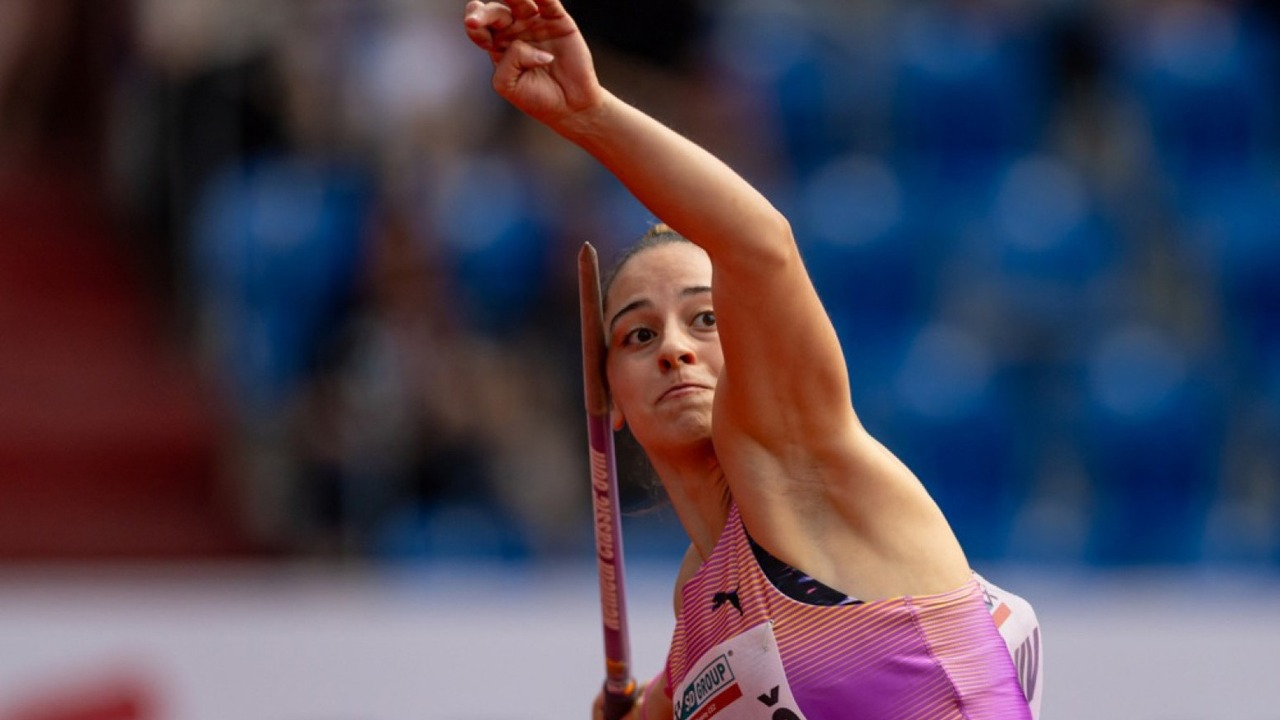
- Author: SerbianSport
- SerbianSport
Adriana Vilagoš won bronze in the women's javelin final at the European Athletics Championships in Birmingham. The Serbian thrower completed the event on 16 August and added another senior continental medal to her record.
Vilagoš entered the final as an established contender rather than a newcomer. She had already won two European senior silver medals and two world under-20 titles. Birmingham gave her another podium finish against a strong European field.
The final required control through all six rounds
A javelin final is built around six possible attempts. The first three throws decide which athletes continue. The leading eight then receive three more chances to improve their marks. That format rewards an early legal result. It also leaves room for a late change in the standings. Athletes must remain ready even when the first attempt places them near the medals.
Vilagoš managed the event well enough to hold a podium position. She avoided a result that depended on one qualification throw. The medal came from her work in the senior final. Wind direction can change between attempts in an open stadium. A thrower adjusts the approach without rebuilding the whole technique. Small changes to speed and release angle can protect a legal throw.
Her recent results placed her among the main contenders
Vilagoš arrived in Birmingham with a personal best of 67.22 metres. She set that Serbian record in 2025. Her 2026 season also included several appearances against leading international throwers. The Serbian athlete recorded 63.83 metres in Paris during June. She had also competed in Xiamen, Oslo and other major meetings.
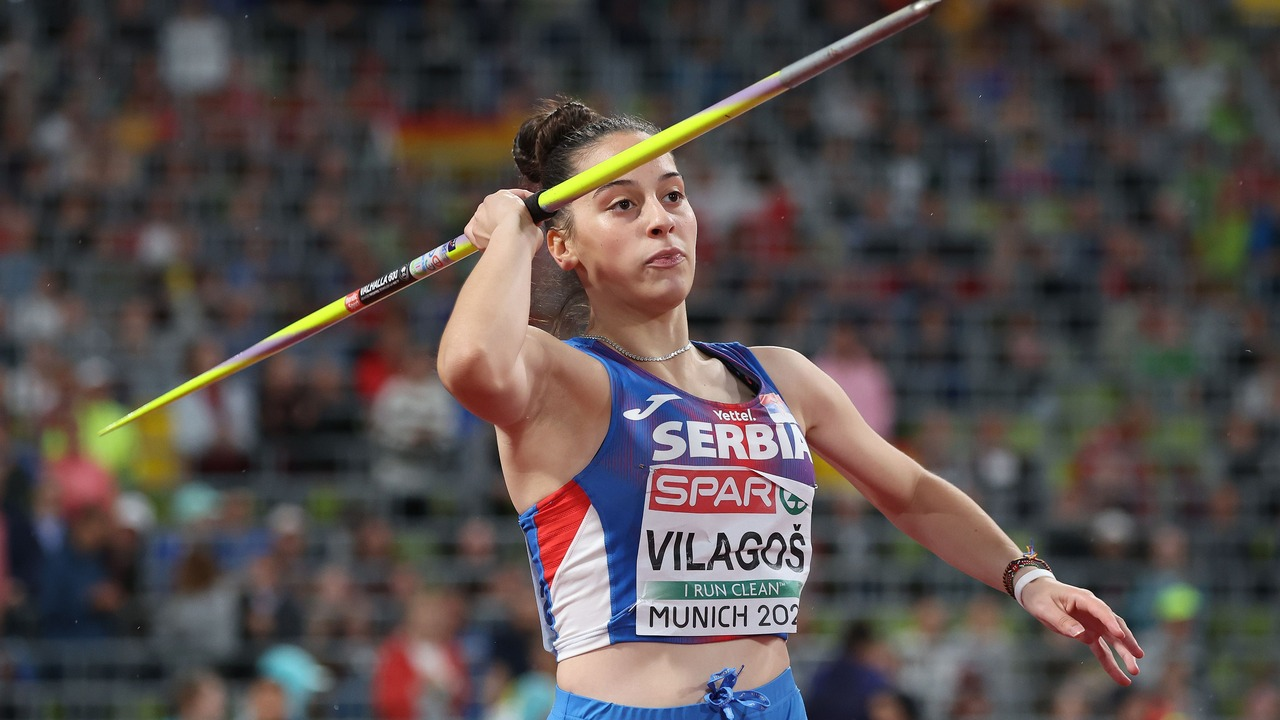
Adriana Vilagoš carries the Serbian flag after an international competition.
Those events provided regular contact with a deep senior field.
A championship differs from a one-day invitational event. Qualification and the final are separate tests. Recovery and accurate warm-up timing become part of the result. Vilagoš already understood that process from previous European and world championships. Her experience helped her handle the full schedule without treating every attempt as an emergency.
The medal continues a strong senior record
Vilagoš won European silver in Munich in 2022 while still a teenager. She earned another silver medal in Rome two years later. The Birmingham bronze is her third senior European medal. Her junior record includes world under-20 titles in Nairobi and Cali. Those victories showed her quality early, but senior competition brought stronger bodies and more experienced rivals.
She has remained near the leading international group during that transition. The new bronze confirms that her earlier medals were not isolated results. It also adds a current 2026 achievement to her profile. Serbia has a long tradition in throwing events. Vilagoš now holds a central place in that group. Her result gives Serbian athletics a clear individual success from the final day in Birmingham.
| European Athletics Championships | Medal |
|---|---|
| Munich 2022 | Silver |
| Rome 2024 | Silver |
| Birmingham 2026 | Bronze |
The next stage begins with recovery and technical review
A major final places heavy load on the shoulder, back and legs. Recovery begins before the next competition is chosen. Training volume normally falls while the body absorbs the work from the championship.
The coaching review can separate useful details from emotion. Run-up rhythm, release position and each legal mark provide concrete information. Video also shows whether any adjustment helped or reduced control.
Vilagoš does not need to change her identity after one medal. Her best performances already place her among the strongest throwers in the world. The next task is to keep that level available across future finals. Birmingham ends with a bronze medal earned inside a full European final. The result belongs to a Serbian athlete who has moved from junior titles to repeated senior podiums. It is a completed achievement, not a forecast.
Qualification and the final demanded separate performances
A throw from qualification did not carry into the final standings. Vilagoš had to secure a place first and then begin a new competition. That rule prevents an athlete from protecting an earlier mark during the medal round. The restart changes the pressure before every attempt in the final. A safe qualification throw can be enough on one day, while the final requires a better mark. The athlete needs both reliability and the ability to increase distance.
The number of warm-up throws also remains limited before the competition. They help the body find the runway rhythm, but they do not count. Once the event starts, every legal attempt enters the official series. Vilagoš completed both stages and stayed among the top three when the final ended. That sequence is more important than a prediction based on her ranking before the championship.
Discuss the news - leave a comment!
Go to comments ↓
Comments
0