Ivanisevic believes Djokovic can continue until the Los Angeles Olympics
- Author: SerbianSport
- SerbianSport
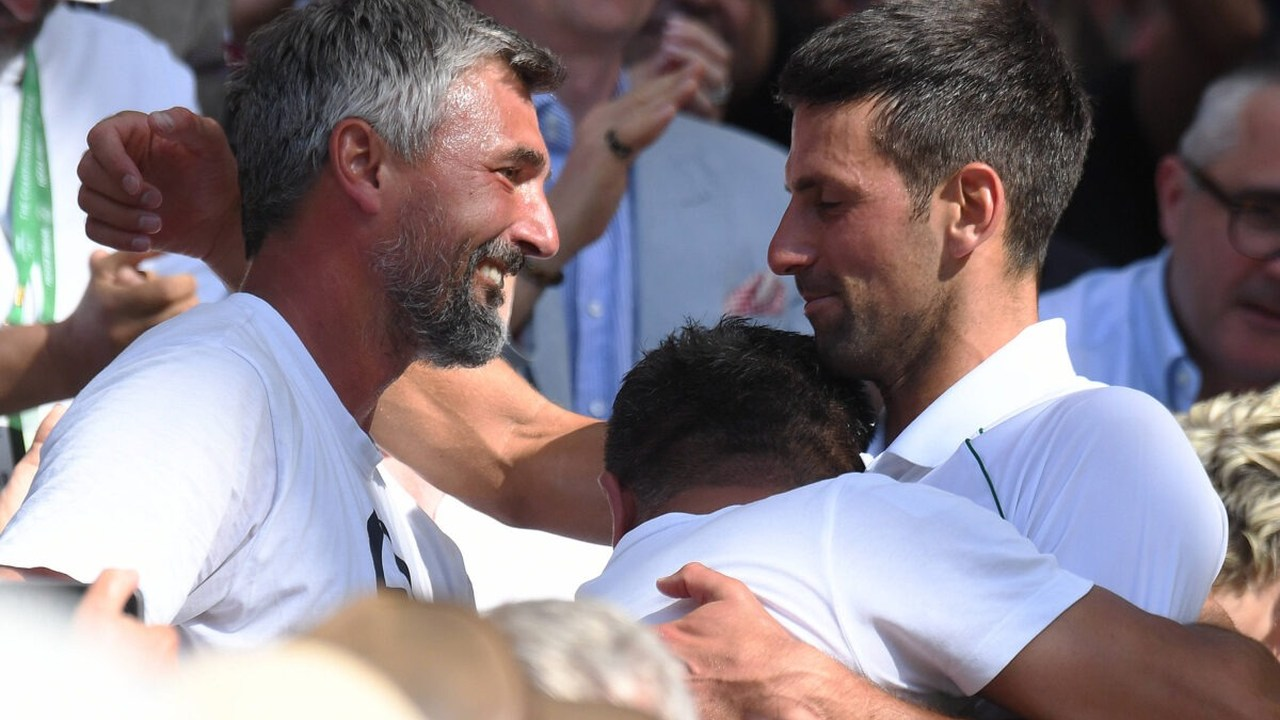
Goran Ivanisevic and Novak Djokovic meet after a tennis match.
Goran Ivanisevic believes Novak Djokovic can continue competing until the Los Angeles Olympics. The former coach sees a selective schedule as the most realistic route.
Djokovic has also spoken about the next Olympic Games as a long-term motivation. He has not set a retirement date or named Los Angeles as his final event.
Ivanisevic knows the work behind major titles
Ivanisevic coached Djokovic through several of the most successful seasons of his career. Their partnership included Grand Slam titles on different surfaces.
That experience gives the Croatian a close view of Djokovic's preparation. He saw the training, recovery and planning required before the public tournament performances.
The two no longer work together, but Ivanisevic remains familiar with Djokovic's habits. His assessment concerns the player's capacity, not a calendar decision made by the current team.
He believes Djokovic still has the discipline needed for another Olympic cycle. The greater question is whether the daily work remains personally rewarding.
Djokovic no longer needs every regular tour week to define his standing. His recent schedules have placed the largest events ahead of a continuous points chase.
Ivanisevic believes the physical side remains manageable with fewer appearances. His greater concern is the motivation needed for another long cycle of training.
Olympic gold changed the long-term target
Djokovic completed a major career goal by winning Olympic gold in Paris. Los Angeles would offer the chance to return as the defending champion.
The Olympic tournament uses a short international window. Players represent their countries and move through a compact draw.

Djokovic acknowledges the Centre Court crowd during Wimbledon 2026.
Reaching the next Games requires health, ranking eligibility and national selection. Those elements will be assessed much closer to the tournament.
Ivanisevic considers the target possible because Djokovic already plans his season around selected events. He does not need to follow the busiest available calendar.
That choice allows the team to build longer training periods around a smaller number of targets. It also creates room to treat minor physical problems before they grow.
Djokovic's support team can adjust practice, recovery and travel around that goal. The player still has to accept the repeated work that comes before each tournament.
A shorter schedule protects preparation time
Djokovic now enters fewer tournaments than during his peak years. Longer breaks provide more time for recovery, family and focused training blocks.
That approach can reduce physical strain. It also makes every competitive appearance more important because fewer matches are available to build rhythm.
| Speaker | Goran Ivanisevic |
|---|---|
| Long-term target | Los Angeles Olympic Games |
| Approach | Selective tournament schedule |
| Olympic status | Paris gold medallist |
Grand Slam preparation therefore starts before the event itself. Practice must reproduce enough intensity for Djokovic to face leading opponents across repeated rounds.
The Djokovic recovery update explains how family time fits beside that selective programme.
Paris showed why the approach can work. Djokovic arrived with one clear Olympic objective and completed it against an elite field.
A selective calendar also changes the importance of early rounds. Djokovic may meet players with more recent match rhythm and must find his level quickly.
Individual tennis carries a heavy mental cost
Ivanisevic stressed the repetition inside an individual sport. A veteran tennis player completes the same technical work year after year without teammates sharing match responsibility.

Djokovic appears at a public event away from tournament competition.
Every point still depends on the player making decisions under pressure. Coaching support matters, but nobody can take over a difficult service game or long rally.
Motivation therefore matters beside fitness. Djokovic must want the training days as well as the major matches that attract the largest crowds.
Family priorities also shape the calendar. A reduced schedule creates balance. It cannot remove the travel required at a major tournament.
Djokovic controlled the important points in the gold-medal match against Carlos Alcaraz. The victory completed his Olympic title.
Djokovic remains close to the leading group
Ivanisevic placed Djokovic near Jannik Sinner, Carlos Alcaraz and Alexander Zverev. He believes the Serbian can still challenge the strongest players at major events.
Producing one elite match is only part of that challenge. A deep run also requires recovery before the next opponent and adjustment to changing conditions.
Djokovic's experience remains a clear strength during important points. His schedule is designed to preserve that quality for the tournaments he values most.
Ivanisevic views Los Angeles as a realistic target. Djokovic's health, motivation and results will shape the seasons before the Games.
Los Angeles would require the same focused preparation at a later stage of his career. The event cannot simply be added to a full calendar without careful planning.
A selective schedule keeps the Olympic target realistic
Djokovic now builds his calendar around selected major events and longer recovery periods. Ivanisevic believes that approach can support another Olympic cycle.
Los Angeles remains a long-term goal rather than a retirement date. Djokovic's health, motivation and results will determine the tournaments he enters before the Games.
Discuss the news - leave a comment!
Go to comments ↓
Comments
0